
Table of Contents
- Why Checking Clothing Quality Online Matters
- Step 1: Examine Product Photos for Construction Details
- Step 2: How to Check Fabric Quality from the Product Description
- Step 3: Inspect Seams, Stitching, and Hardware Quality
- Step 4: How to Read Clothing Labels and Care Instructions
- Step 5: Identify Signs of Well-Made Clothes in Customer Reviews
- Step 6: Questions to Ask Before Buying Clothes Online
- Step 7: What to Do When Information Is Missing or Unclear
- Frequently Asked Questions
Last Updated: October 14, 2026
Why Checking Clothing Quality Online Matters
Buying clothes online without touching the fabric or inspecting the stitching feels risky, yet millions of people check clothing quality online every day and find exactly what they're looking for.
The difference between a great purchase and a disappointing one comes down to knowing what to look for. At M.Art.Inc, we offer unique statement pieces that allow you to showcase your personal style.
Most online retailers provide the information you need, just not always in an obvious way. Product photos, fabric descriptions, care labels, customer reviews, and return policies all tell a story about whether a piece is well-made. Learning to read these signals means fewer returns and more pieces you actually love.
Step 1: Examine Product Photos for Construction Details
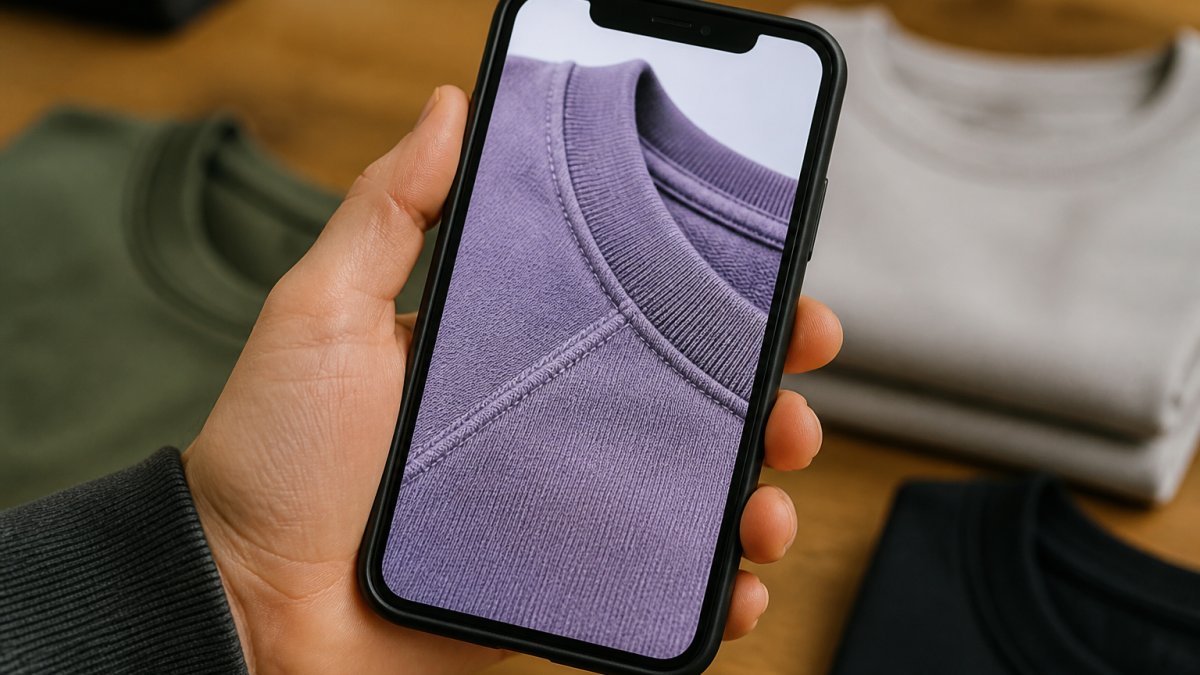
Product photos are your window into how a garment is constructed. Look for images that zoom in on seams, hems, and other construction points.
Start by checking whether the retailer provides multiple angles. A single photo from one direction isn't enough. You want to see:
- Close-ups of seams and stitching
- The inside of the garment (linings, tags, hems)
- How the fabric drapes on a real body
- Details of buttons, zippers, and other hardware
Pay attention to lighting too. Professional product photography uses bright, even lighting that reveals imperfections: uneven seams, loose threads, crooked hems, or sloppy stitching.
Look for consistency in colour across photos. Different lighting can shift shades, but the colour should be recognisably the same piece. If one photo shows a much darker or lighter version, question whether the retailer is being honest about what you'll receive.
Many retailers now include customer-uploaded photos, which show the garment on real body types. You'll see how it drapes, whether it's see-through, and whether the fit matches the description.
Step 2: How to Check Fabric Quality from the Product Description
The product description tells you what a garment is made of and how it will behave, including fibre content, fabric weight, and material performance.
Fibre content is the first thing to check. Cotton breathes and feels soft but can shrink. Wool is warm and durable but may itch or pill.
Look for blends. A cotton-polyester mix combines cotton's breathability with polyester's durability. Read the percentage breakdown: an 80% cotton, 20% polyester shirt will feel more like cotton than a 50/50 one.
Fabric weight matters more than people realise. Measured in grams per square metre (gsm), a lightweight t-shirt might be 150 gsm, while a heavyweight one is often 240 gsm or more.

The MAI 240 GSM Heavyweigh Boxy Oversized T Shirt from M.Art.Inc, for example, uses 240 gsm fabric made from Better Cotton. This weight and material choice signals durability and quality construction.
Look for thread count or weave type if mentioned.
Check for special treatments. Preshrunk fabric prevents shrinkage; mercerised cotton is treated to improve shine and strength. These details show the maker cared about quality.
Step 3: Inspect Seams, Stitching, and Hardware Quality
Seams and stitching reveal how well a garment was made. Poor seams fall apart. Quality seams hold for years.
Examine seam construction in the product photos. Look for straight, even seams with no puckering or bunching, running parallel to the edges they're binding.
Check stitch density. Tight, closely-spaced stitches hold better than loose ones. You won't see individual spacing online, but look for overall evenness; sloppy or inconsistent stitching suggests a poorly maintained machine.
Look for reinforced seams at stress points. Armholes, shoulder seams, and crotch seams take the most strain, so quality garments use double stitching or reinforcement there.
Hems and finishing matter too. A well-finished hem is straight, even, and flat; uneven hems or loose threads suggest careless construction. Double stitching is stronger than single.
Examine buttons and button attachment. Buttons should be sewn on securely with visible stitching; if one looks glued or barely attached, it will fall off.
Zippers should be smooth and aligned, sewn in straight and secure. Cheap zippers stick or jam easily.
Look at seam tape or binding on the inside.
Step 4: How to Read Clothing Labels and Care Instructions
The care label tells you how the fabric behaves and how to maintain the garment, directly from the maker.
Fibre content appears on every label by law in most markets, listed in descending order by weight. If cotton is first, the garment is mostly cotton; if polyester is first, it's mostly synthetic.
Care instructions reveal durability. "Hand wash cold" or "dry clean only" suggests delicate fabric; "machine wash warm" or "tumble dry" suggests strong, durable fabric that can take more abuse.
Check the recommended washing temperature. Hot water can shrink or fade some fabrics, cold water is gentler but less effective, and warm water is the middle ground. A cold-water recommendation means the fabric is likely sensitive.
Look at bleach and drying instructions. "No bleach" means sensitive dye or fabric.
Ironing instructions tell you about fibre type: natural fibres like cotton and linen often need ironing, while synthetic blends resist wrinkles.
The country of origin appears on most labels. It doesn't guarantee quality, but some countries have stricter manufacturing standards than others.
MAI 240 GSM Heavyweigh Boxy OversizedT Shirt →
Step 5: Identify Signs of Well-Made Clothes in Customer Reviews
Customer reviews and photos are honest feedback from people who've already bought and worn the garment, telling you things the product description won't.
Look for reviews that mention durability.
Check reviews about fit and sizing. If multiple reviewers say a garment shrinks or stretches out over time, you know it won't hold its shape.
Read reviews about fabric feel and behaviour. Customers describe whether fabric is soft, stiff, itchy, or comfortable, and whether it pills, fades, or wrinkles, real-world feedback more valuable than a product description.
Look at customer-uploaded photos. They show the garment on real bodies, in real lighting, after real use, revealing whether it's see-through, how it drapes, and any flaws the official photos hid.
Pay attention to review dates. Recent reviews are more relevant, since quality can change if a maker switches suppliers or factories.
Look for specific, detailed reviews. "Great shirt" tells you nothing; "perfect weight, held its colour after 10 washes, seams are reinforced" tells you exactly what to expect.
Watch out for obviously fake reviews. Reviews that are too perfect, use identical language, or mention no downsides are suspicious; genuine reviews note both strengths and weaknesses.
Step 6: Questions to Ask Before Buying Clothes Online
Before you click buy, ask yourself these questions to spot quality issues before your money leaves your account.
Is the fibre content clear? If the description says "premium blend" without exact percentages, move on. Honest retailers are transparent about materials.
Are the photos detailed? If the only photos are flat lays or distant shots, with no close-ups of seams, stitching, and hems, you can't assess quality properly.
Does the fabric weight make sense?
Are care instructions detailed? Vague instructions suggest the maker doesn't understand their own product.
What do reviews say about durability? If customers don't mention the garment lasting through multiple washes or seams holding up, that's telling.
Does the price match the quality? Cheap garments are made from cheap materials. If a piece costs half what similar items cost elsewhere, there's usually a reason. M.Art.Inc pieces like the Vampire Crypt 240 gsm T 7412 at £24.99 use heavyweight 240 gsm Better Cotton, which justifies the price.

Is sizing information available? If there's no size chart with actual measurements and no reviews on fit, you're guessing.
What's the return policy? A generous return policy suggests the maker is confident in quality.
Step 7: What to Do When Information Is Missing or Unclear
Sometimes you'll find a piece you love but the product information is incomplete. You have options before you give up.
Contact the retailer directly. Ask specific questions: What's the exact fibre content? What's the fabric weight? Is it preshrunk? Reputable retailers will answer; vague answers or silence are red flags.
Look for independent reviews. Search the product name plus "review" on social media or YouTube for detailed customer photos and videos that reveal what the product page doesn't.
Check whether the retailer has a physical location or showroom. Some online-only shops have pop-ups or partner with brick-and-mortar retailers, letting you see the piece in person and eliminate guesswork.
Ask about sample orders. Some makers send a sample for a small fee, letting you feel the fabric before ordering full-size.
Use the return policy as insurance. If you're uncertain, order anyway and return it if it doesn't meet expectations. A generous return window gives you time to inspect the garment properly.
Look for certifications. Labels like WRAP (Worldwide Responsible Accredited Production), Better Cotton, or GOTS (Global Organic Textile Standard) signal that the maker meets specific quality and ethical standards (Home). The Christmas Calories Sweatshirt from M.Art.Inc carries WRAP Certified Production, which means it was made in facilities that meet strict standards.

| Quality Signal | What It Means | How to Check |
|---|---|---|
| 240+ gsm fabric weight | Durable, won't be see-through | Product description |
| Natural fibre blend (cotton, wool, linen) | Better breathability and comfort | Fibre content label |
| Reinforced seams at stress points | Longer garment lifespan | Close-up product photos |
| Detailed care instructions | Maker understands their fabric | Care label |
| Multiple customer reviews mentioning durability | Real proof of quality | Customer review section |
| Specific fabric percentages listed | Honest, transparent retailer | Product description |
Checking clothing quality online is a skill that improves with practice.
At M.Art.Inc, we believe quality matters because your clothes are a canvas for your self-expression. Use these seven steps before your next purchase to build a wardrobe of pieces you genuinely love. Shop now
Frequently Asked Questions
What should I look for when checking clothing quality online?
Focus on five key areas: fabric composition and weight (check for natural fibres like cotton or wool), seam construction and stitch density, thread quality and reinforced seams, hardware durability (buttons and zippers), and finishing details like hems and lining. Read product descriptions carefully for fabric weight in gsm (grams per square metre) and fibre content. Heavier fabrics (240 gsm or above) typically indicate better durability. Examine product photos for visible stitching quality and check customer reviews for wear patterns and longevity.
How can I tell if a fabric is good quality from the product description?
Look for specific details: natural fibre content (100% cotton, wool, linen), fabric weight measured in gsm, and weave or knit type. Higher gsm values indicate thicker, more durable fabric. For example, heavyweight t-shirts at 240 gsm offer better durability than lighter alternatives. Check whether the fabric is single-ply or multi-ply, and note any mentions of reinforced construction. Avoid vague descriptions. Transparent sellers provide exact fibre percentages, thread count for woven fabrics, and washing instructions that indicate the fabric's care requirements.
What's the difference between well-made clothes and poor quality pieces?
Well-made garments have consistent, tight stitching with even stitch length, reinforced seams at stress points (shoulders, underarms), quality hardware that doesn't catch or break easily, and finished hems and lining. Poor quality pieces show loose stitching, puckered seams, unravelling thread, cheap buttons that fall off easily, and visible loose fibres. Fabric feel matters too: well-made clothes use quality fibres that feel soft and substantial, while poor quality fabrics feel thin, cheap, or prone to pilling. Check care labels for washing instructions that suggest the garment can withstand regular wear without shrinkage or damage.
Should I buy from sellers with few or no customer reviews?
Exercise caution. Customer reviews provide real-world insight into fabric durability, fit accuracy, and how garments perform after washing. Look for reviews that mention specific details: how the fabric feels, whether it shrinks, if seams hold up, and whether colours fade. Photos uploaded by buyers are especially valuable because they show how the garment actually looks on real bodies and after wear. If a seller has no reviews, ask for additional product images, request clarification on fabric composition and weight, and check their return policy. A generous return window suggests confidence in quality.